Friday, April 25, 2014

Growing Week I

Growing Week I marks a continuation of our over-arching unit, All Living Things Grow, which began several weeks ago with "Baby Weeks".  This week we focused on plant life that "grows" from seeds!  We read both fiction and non-fiction books on the topic, and sang several "growing" songs.  Our class discussions were focused on the Science of how seeds grow.


We spent time planting flower, bean, basil, sprout and grass seeds.


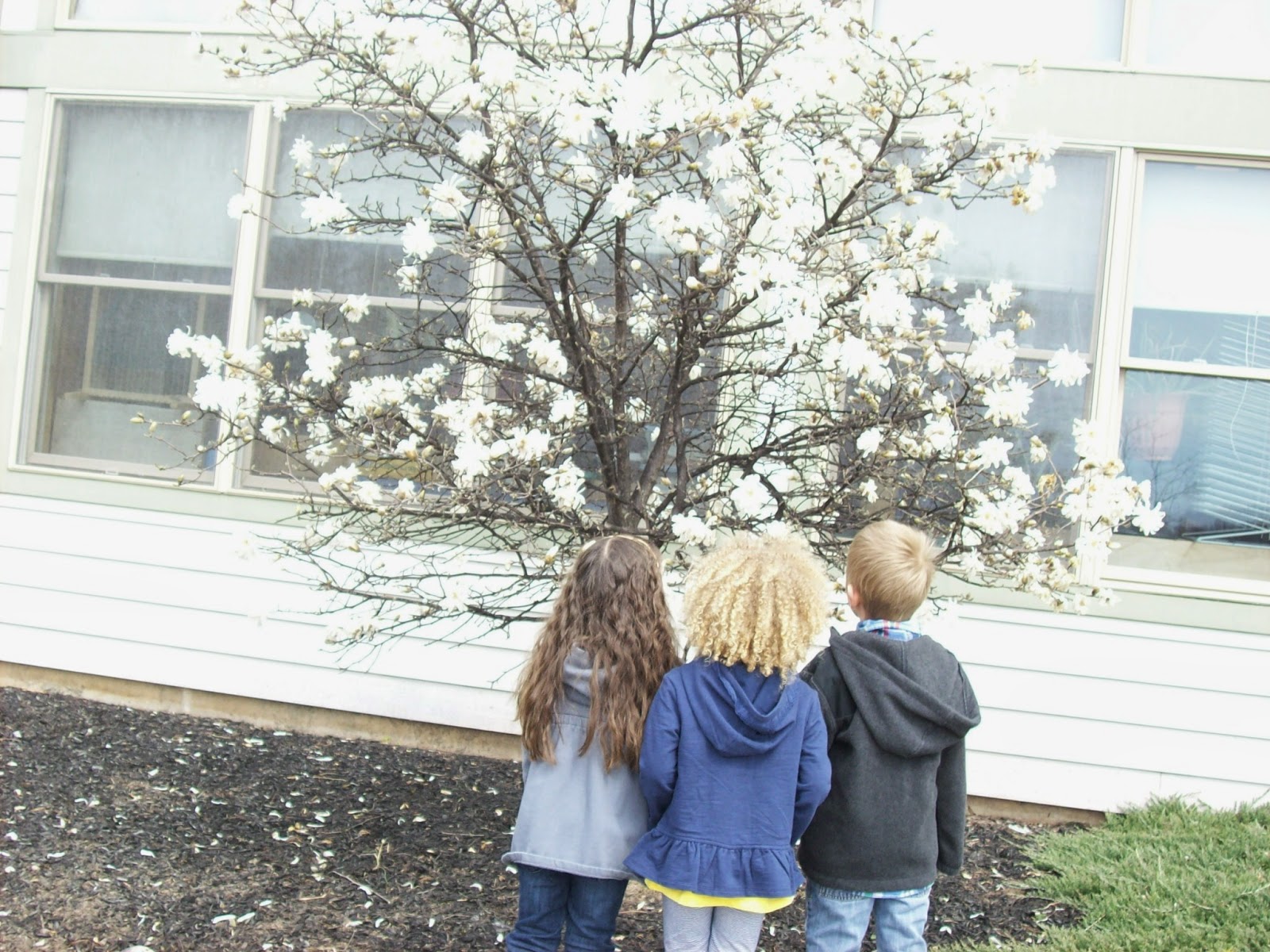
Additionally, we spent time observing and exploring all of the lovely flowers and tree buds that are now in bloom at Parker School.


Our classroom activities included:
Flower Printing


Flower Arranging


Painting Bird Houses


Plant Puzzles


Stitching Bird Cards


Looking Deeper:  Exploration and Learning through Play
 Let's take a closer look at the on-going Science concepts we explored this week.

As I mentioned "Growing Weeks" are part of a larger unit of study that I call, "All Living Things Grow".  Generally speaking, "Growing Weeks" are a time to explore and discuss plant life that grows from seeds.  It is strategically scheduled to coincide with Spring so that the children can simultaneously observe and explore all of the things that are beginning to grow once again after our long cold winter. 


As you may remember, we began this unit in early April with "Baby Weeks".  During "Baby Weeks" we explored and discussed our personal growth since we were babies.  We discerned that babies need three important things in order to grow; healthy food, plenty of rest, and plenty of exercise.  Incidentally, these are the same three things that assured personal health and growth as per our discussions during "Doctor Weeks" in mid-March.  As you can see the children's learning is iterative, as concepts interconnect, support and build upon each other.  This week as we explored, discussed and planted seeds, we discerned that seeds also need three things to insure their growth; namely, soil, sun and water.


Growth happens over time, and cannot be observed directly  in the moment, yet the children demonstrate in many ways their understanding of this concept that all living things grow.  One of the fun ways in which they do so is during a game we call "Can I Plant a Seed in the Soil and Grow......?"  We play the game during our class discussions at Story Time.  Basically, I ask the children "Can I plant a seed in the soil and grow a tree, a carrot, a flower, a car, a block, an apple, a potato, a hat etc."  The game exercises the children's thinking skills, and they always discern which things are living and can therefore grow, as well as which things are inanimate and cannot grow.  After a time, the children take on the part of asking the question; "Can I Plant A Seed in the Soil and Grow......?"    Guessing games are a wonderful "play" genre for teaching, learning, developing thinking skills and are also great fun!

In addition to the general concepts of seed growth, we discussed some very specific facts as well.  We used multiple visual tools to illustrate that as a seed grows it first sprouts its roots, then its stem, then its leaves, and then its flower and/or fruit.


We are currently germinating a bean seed that will concretely demonstrate this to the children.  I never cease to be amazed at how much the children love "doing" hands-on Science.  


We planted lots of seeds this week, both in reality and metaphorically.  
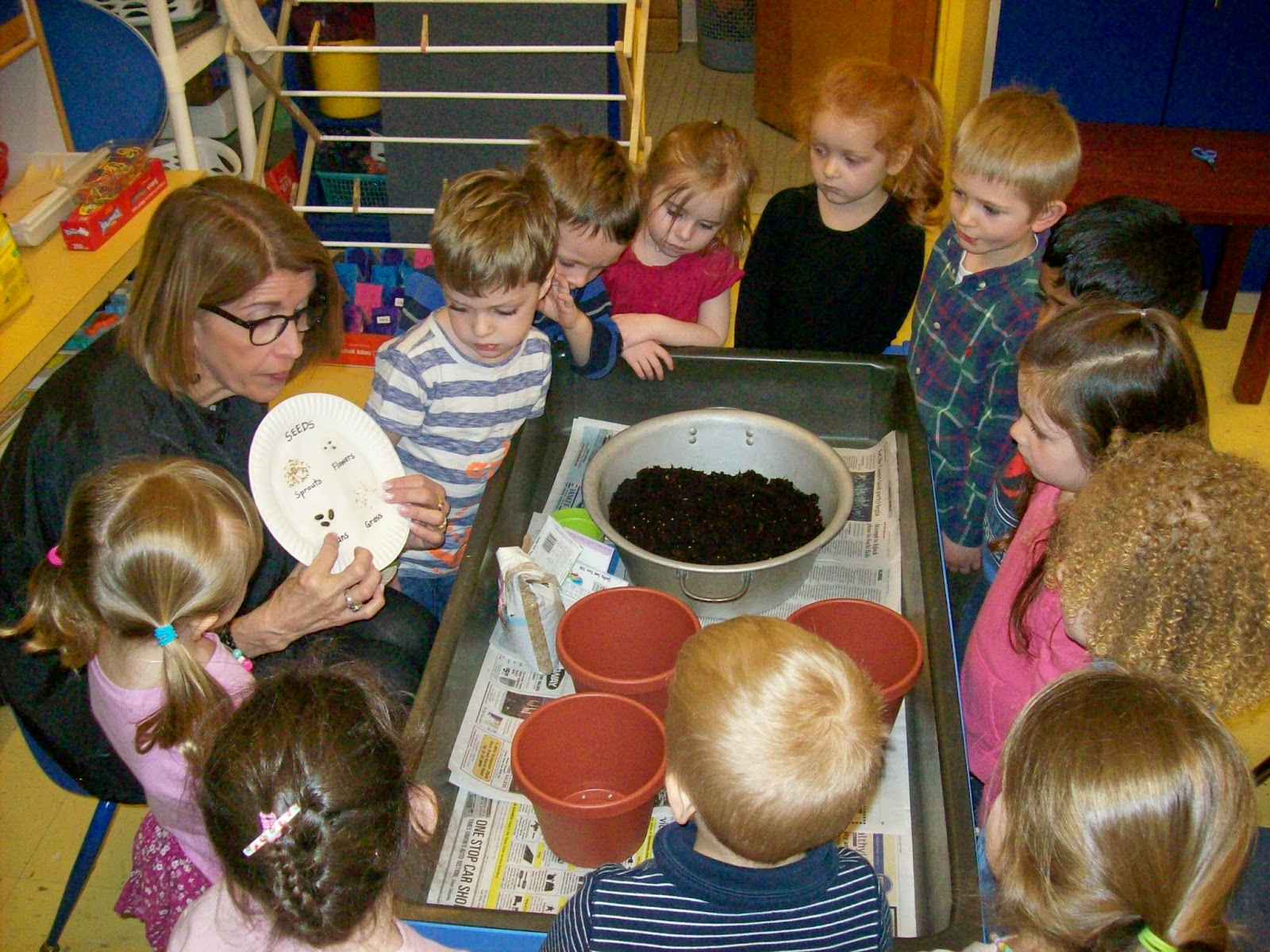


The children are looking forward to seeing their seeds grow over the coming weeks, and I derive great joy in witnessing daily the growth of those metaphoric seeds!


Have a fun and restful weekend!

Friday, April 11, 2014

Baby Week II

Baby Week II facilitated a continuation of our baby exploration through play and discussion.  Additionally we broadened our scope to include music, movement, literature and  "special guests"!

We pretended to be babies during Music and Movement time!  First we could only lay down, after a time we could roll over, soon we were crawling, and before you knew it we were taking our first steps!


In addition to reading lots of "Baby Books", Baby Mikka came for several visits during story time.


We also had lots of visits from real babies!

Sammy's brother Ben

Rowan's sister Isla

Louisa's sister Mapel

Emmett's sister Meryle

Evvie's brother Declan

Ann's granddaughter Emersyn and my granddaughter Anna

We had a wonderful time all week working with Sean, Eric and John as we participated in Parker's Artist in Residence Program.


We had a fun time celebrating with Sebastian who turned four on Thursday!


Many thanks to Reid's mom, Janel for coming in as our Guest Reader.


Looking Deeper:  Exploration and Learning through Play
Let's take a closer look at Parker's Artist in Residence Program, and its emphasis on process as well as product.

For the past two weeks the children have worked with Sean, Eric and John for a half hour each day as part of Parker's Artist in Residence Program.  The broad umbrella of the program includes learning about storytelling in general, learning about William Shakespeare's story telling in particular for the older students, opportunities for movement and improvisation and providing an opportunity for all of the children to be part of a school-wide performance for the Parker Community.  This year in addition to creative movement exercises each day, the children listened to a reading of the book, Caps for Sale, and then helped develop a play based on that story in which they played the part of the monkeys.   The children fully enjoyed the time spent with Sean, Eric and John each day between 9:30 and 10:00, and it was these sessions more than the performance that made the greatest impact on the students because the program is much more focused on process than it is on product.  For those of you who were able to stay for the entire performance , you are fully aware that the product was indeed impressive.


However,  above and beyond the performance, our youngest students were deeply impacted by this special time.  This was profoundly illustrated to me this past Wednesday when Tommy, who had been playing independently, emerged from the Dress-Up Corner, with no fewer than six hats stacked on his head and proclaimed; "Caps for Sale"!  A clear sign of learning is being able to demonstrate what you have been taught, and such demonstrations routinely occur within our classroom.  It is moments such as these that are most exciting to me as they illustrate not only the children's learning, but the joy that the children have experienced in the learning! 


Have a fun and restful weekend, and a wonderful break!

Thursday, April 3, 2014

Baby Week I

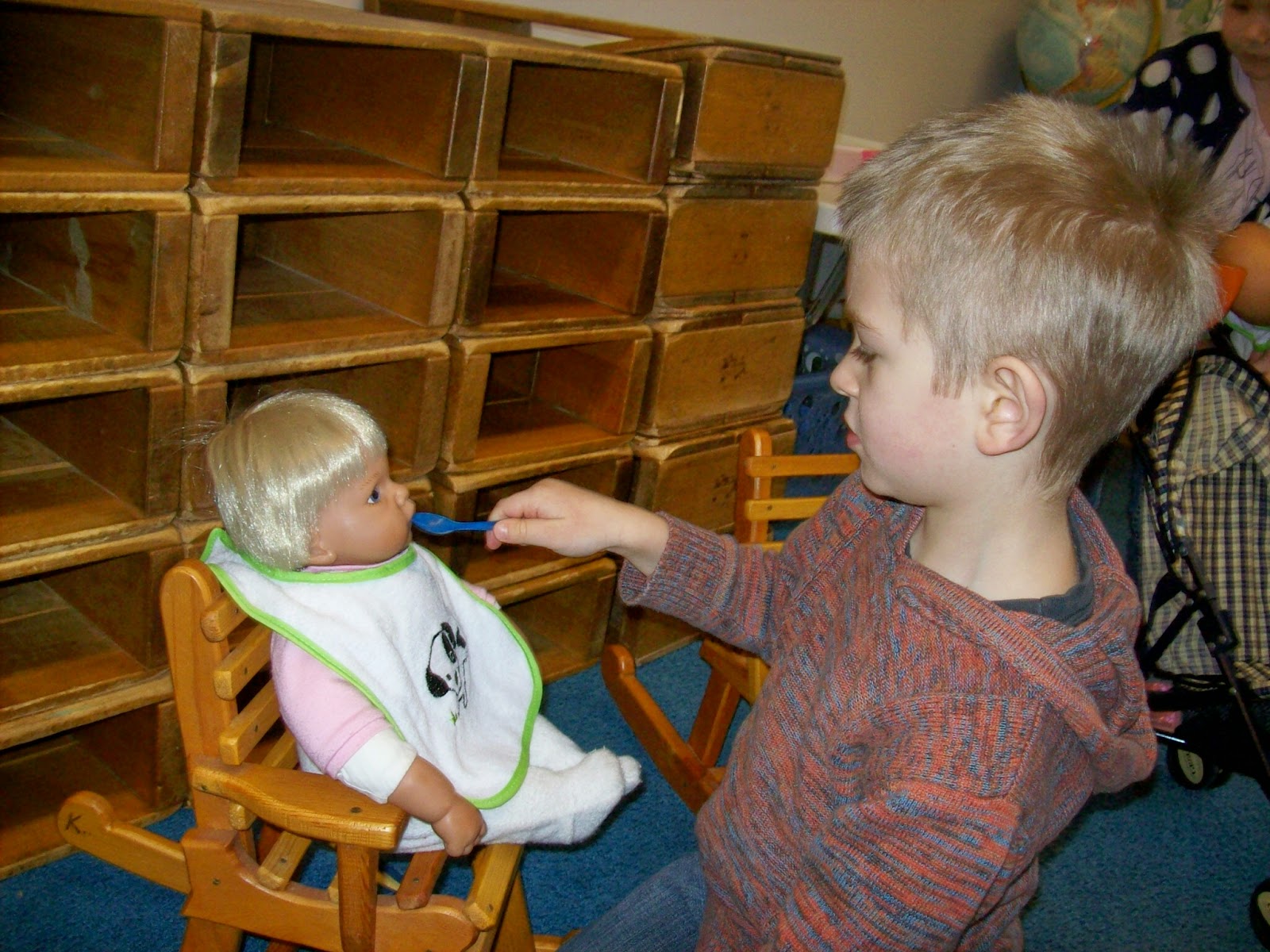
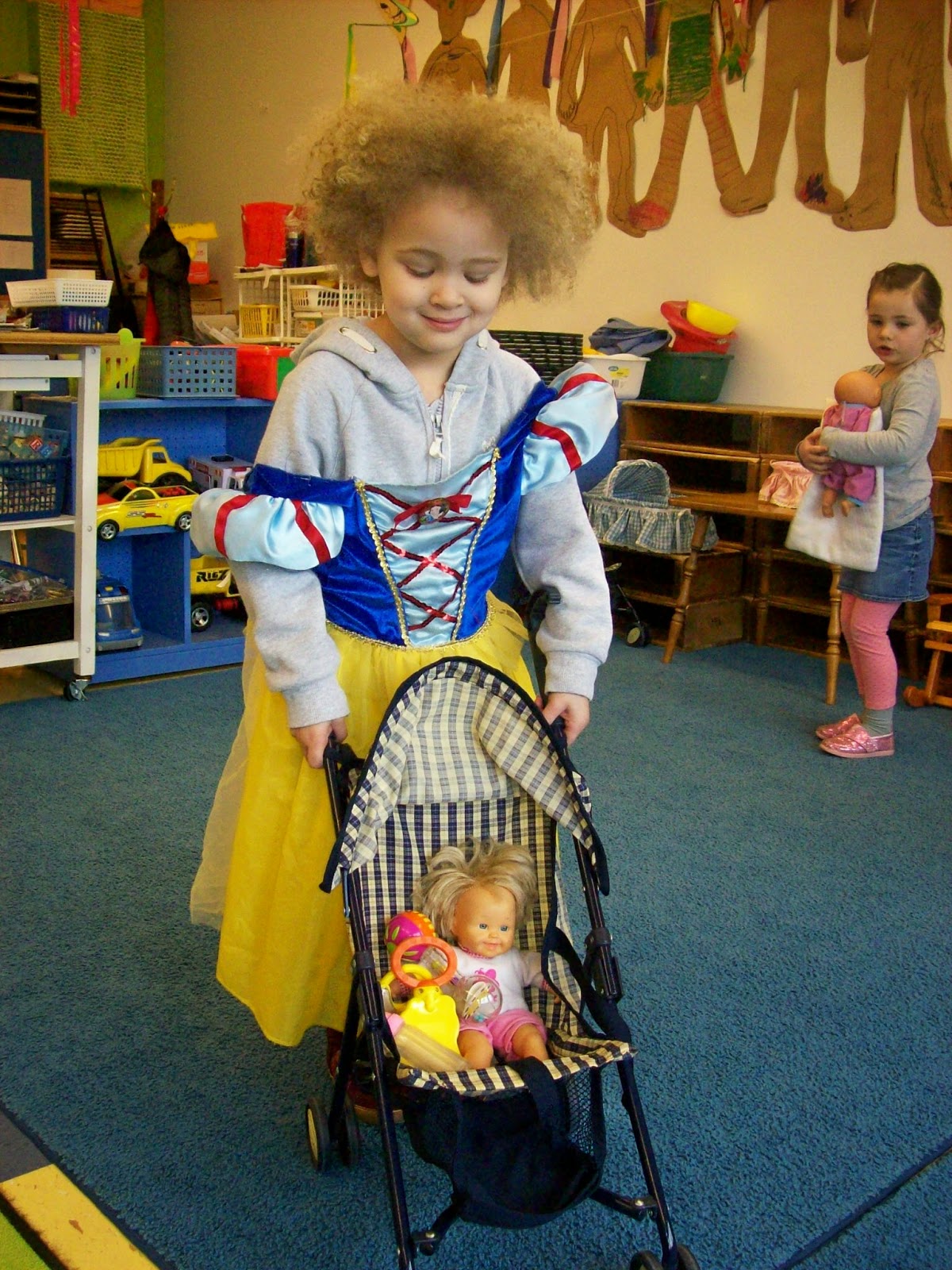
Baby Week I provided lots of time and opportunity for the children to take on the role of caregiver and nurturer of our classroom babies. 


Additionally, the children explored and assumed these same roles as they played with the large play houses that were brought into the classroom for our Baby Weeks.


Baby Week is the starting point of our Growing Unit, so there was lots of discussion about the many ways in which the children have grown since they were babies.  The children took great pride in sharing their baby picture, clothes and story with their classmates.  This activity provided a concrete illustration of each child's personal growth.


Looking Deeper:  Exploration and Learning through Play
Let's take a closer look at the recurring connection between the children's play and our class discussions.

 During Doctor Weeks, we talked about the three things we need to do to stay healthy.  They are: eat health foods, get plenty of rest, and get plenty of exercise.  This week as we discussed how much we have grown since we were babies, we concluded that these three activities not only kept us healthy, but also facilitated our growth from babies to the present!  Interestingly, before we even had this conversation the children innately revealed that they possessed this knowledge in the way that they "played" and cared for the dolls.  Within their play they consistently fed, walked and napped the babies daily.  Children routinely demonstrate, broaden and deepen their knowledge within their play.   Frequently our class discussions merely point out to the children what they actually know.  Often our discussions merely put the knowledge they have both gained and exhibited during their play into words that they can then share and apply at other times and within other situations.  In a way, the play environment is the research lab and our discussions provide a forum for reflective and connective thinking while processing our findings! 


Have a fun and restful weekend!